Why we focus on couples.
One practice, one thing we do well. We're not a multi-specialty clinic that "also does couples." Couples work is the work — and that focus changes what a session looks like.
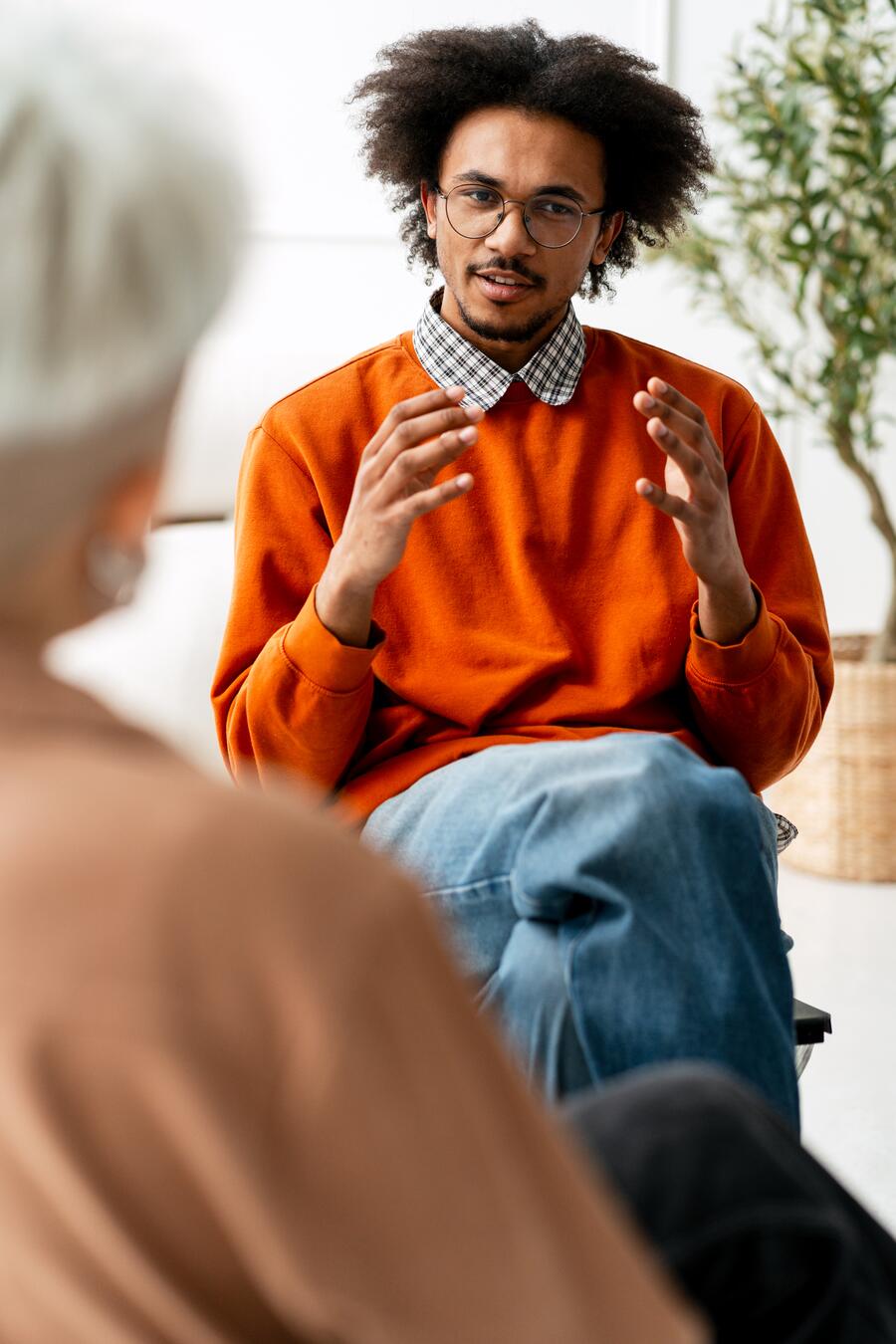
The work itself
The most-cited reason couples therapy fails is that the therapist is too passive — sitting across the room while the same fight unfolds, then nodding warmly when the hour is up. It's not that the warmth is wrong. It's that warmth without intervention is a long, expensive listening session.
We work differently. We interrupt patterns when we see them. We name what's happening between the two of you in real time, not at the end of the hour. We give homework when homework helps. We don't take sides — but we also don't pretend not to notice when one of you is doing something that, week after week, is making things worse.
"Active, not passive" is the shorthand. The longer version is: we treat the partnership as the client, and the partnership has work to do.
"We had been to couples therapy before. The first hour here, I realized: oh — this is the work. Last time we just took turns telling our story."
A few small commitments that shape every session
The partnership is the client
Not you. Not your partner. The relationship between you. That changes how we listen, and what we say back.
We don't take sides
Even when one of you is more sure than the other. Even when something difficult has happened. We hold space for both stories.
The modality follows the work
We're trained in five evidence-based approaches. The work decides which one — sometimes a blend, sometimes one fits cleanly.
Specifics over generalities
"You don't communicate" doesn't help. "Last Tuesday at 10pm, here's the loop you went into" — that we can work with.
Affirmative, by default
LGBTQ+ couples, intercultural couples, neurodiverse couples — affirmative care is how we show up by default, not a separate "specialty" page.
Plain-language, always
If clinical language helps, we use it and explain it. If it doesn't, we leave it out. Therapy isn't a vocabulary test.
The methods we draw from
We're trained in five evidence-based approaches to couples work. We pick the one that fits what you're working on — sometimes a blend. None of them is the right one for everyone. All of them have outcome data behind them.
Gottman Method
Half a century of longitudinal research. The Sound Relationship House. The four horsemen. Concrete tools for managing conflict and rebuilding fondness.
Read more → Largest evidence baseEFT — Emotionally Focused Therapy
Sue Johnson's attachment-based model. Works with the patterns underneath every fight. 70–75% recovery rate in published studies.
Read more → Acceptance + changeIBCT — Integrative Behavioral
Christensen and Jacobson's UCLA model. Combines acceptance work with concrete behavior change. Strong VA / military couples evidence.
Read more → Stay or leaveDiscernment Counseling
Bill Doherty's brief decision-focused process. 1–5 sessions, three paths. For couples where one of you is leaning out.
Read more → Neurobiology-informedPACT — Psychobiological Approach
Stan Tatkin's model. Attachment + neurobiology + secure-functioning. Body, breath, eye contact — couples work that's somatic as well as verbal.
Read more →Eight languages spoken at the practice
Couples therapy in your second language — or your partner's — is a recognized barrier to care. We work in English, Spanish, Chinese, Vietnamese, Hindi, Italian, Arabic, and Armenian at the practice level. Sessions are scheduled with a clinician fluent in the language you choose.
Our affirmative care extends across the LGBTQ+ spectrum, across faith traditions, and across mixed-status households. We don't ask about immigration status. We don't share information with ICE or any government agency. Therapy is confidential.
Ready to start? We've been here before.
Reach out. Same-day response on weekdays. We'll talk through fit before you book.
Book your first session